

Biohacking 2026: The Tools That Actually Work 💪
What Is BioHacking Explained In a world flooded with optimization promises, a small group of tools continue to separate performance from placebo. By FitHaven Not long…
What Is BioHacking Explained
In a world flooded with optimization promises, a small group of tools continue to separate performance from placebo.
By FitHaven
Not long ago, biohacking lived on the fringes—an experimental blend of Silicon Valley ambition and locker-room folklore. It was a space defined as much by curiosity as it was by contradiction: ice baths beside unregulated supplements, wearable tech alongside unproven claims of cellular rejuvenation. In 2026, that landscape looks markedly different. Biohacking has matured, but more importantly, it has been filtered.
What remains is not a sprawling toolkit of futuristic promises, but a refined set of interventions that consistently deliver measurable results. These are not secrets reserved for billionaires or elite labs. They are accessible, repeatable, and, when used correctly, remarkably effective.
The conversation has shifted. The question is no longer what’s new, but what works.
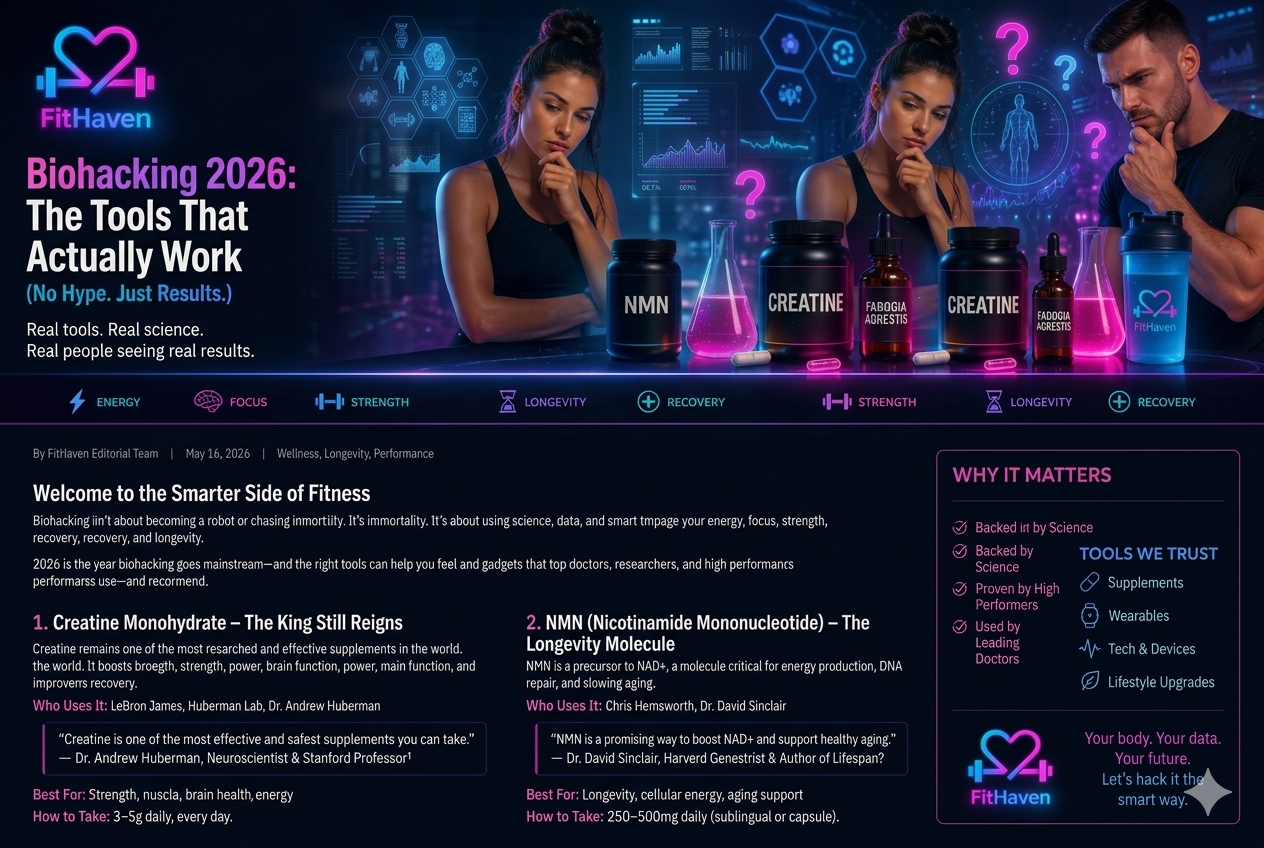
Creatine, for instance, has quietly reasserted itself as the foundation of any serious performance stack. Once pigeonholed as a muscle-building supplement, it has reemerged as a broader performance enhancer, supported by decades of research and an expanding understanding of its neurological benefits. At a cellular level, creatine improves the body’s ability to regenerate ATP, the fundamental unit of energy. This translates not only to increased strength and power output, but also to improved recovery and, increasingly, cognitive resilience.


Neuroscientist Dr. Andrew Huberman has repeatedly pointed to creatine as one of the most reliable and well-supported supplements available, emphasizing its utility beyond the weight room. Its continued use among elite athletes, including LeBron James, reflects a broader truth within performance culture: the most effective tools are often the ones that endure.
If creatine represents the foundation, the growing interest in longevity-focused compounds signals where the conversation is heading. Among these, NMN—nicotinamide mononucleotide—has emerged as a focal point. As a precursor to NAD+, a molecule essential to cellular energy production and DNA repair, NMN has become synonymous with the pursuit of healthy aging.
The research, led in part by Harvard geneticist Dr. David Sinclair, has demonstrated compelling results in animal models, with early human data beginning to take shape. Public interest has accelerated alongside high-profile adopters, including Chris Hemsworth, whose exploration of longevity practices has brought these conversations into the mainstream.
Still, NMN occupies a more nuanced space than creatine. It is not yet a universal recommendation, nor is it a guaranteed outcome. Instead, it represents the frontier—promising, evolving, and best approached with measured expectations.
Where the science is far less ambiguous, however, is in the domain of sleep. For all the technological advancements and biochemical interventions available today, no tool rivals the systemic impact of consistent, high-quality sleep. It remains the most undervalued and yet most powerful driver of performance.
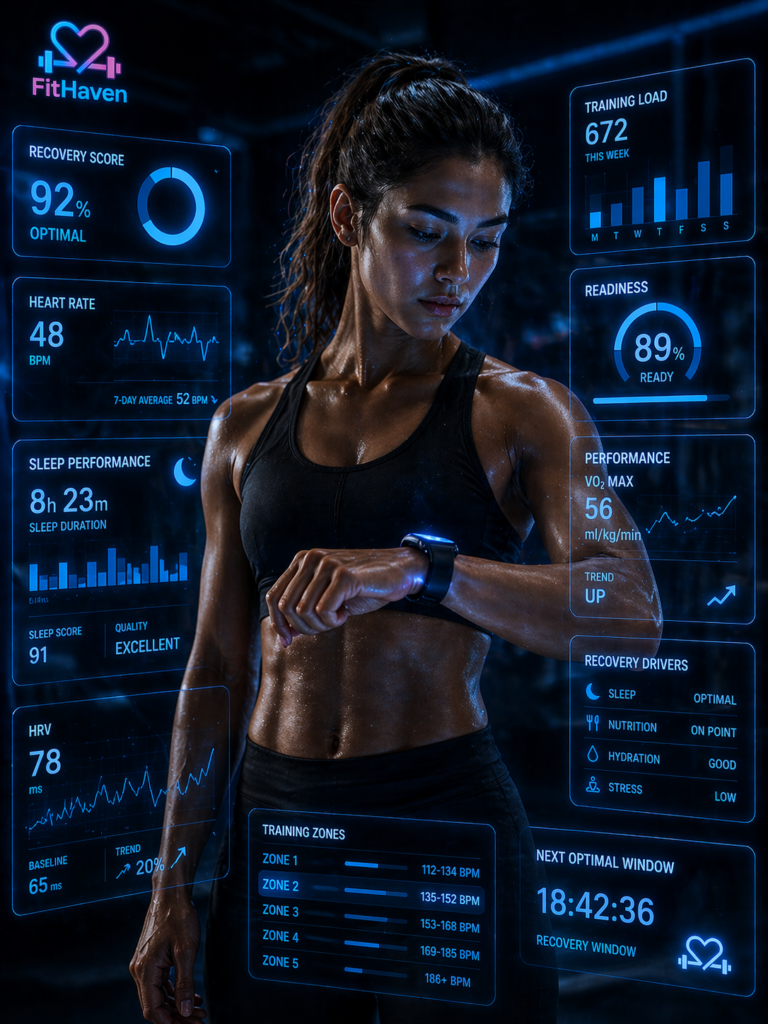
During sleep, the body orchestrates a complex series of processes: hormonal regulation, tissue repair, neural consolidation. Disruptions to this cycle do not merely reduce energy levels; they compromise nearly every aspect of physical and cognitive function. Sleep scientist Dr. Matthew Walker has described it as the single most effective mechanism for resetting the brain and body, a statement that continues to be reinforced by an expanding body of research.
In response, sleep optimization has evolved from a passive goal into an active practice. Wearable technology, such as the Oura Ring, has enabled individuals to quantify patterns once left to intuition, offering insight into recovery, readiness, and behavioral adjustments that can meaningfully improve outcomes.
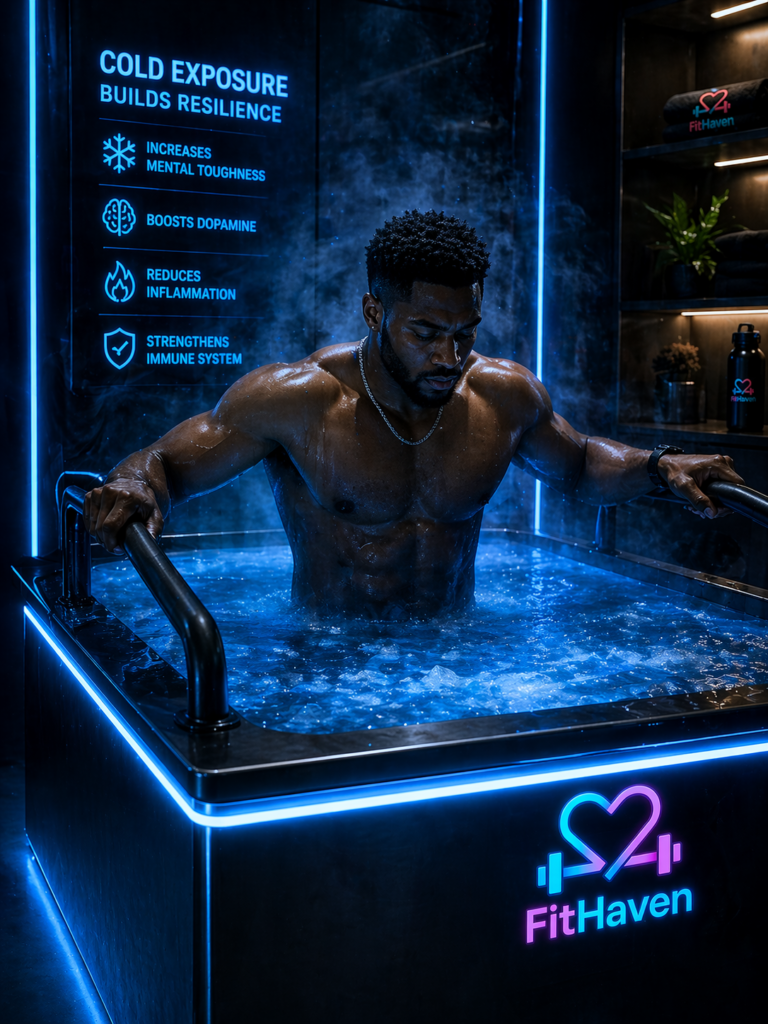
If sleep represents internal restoration, cold exposure offers a more immediate, external stimulus. Once dismissed as a fleeting trend, it has proven to be both durable and effective. The physiological response to cold—marked by a sharp increase in dopamine, improved circulation, and reduced inflammation—creates a unique combination of mental clarity and physical recovery.
Protocols discussed by Dr. Andrew Huberman emphasize consistency over extremity, favoring short, controlled exposures that can be sustained over time. Its adoption by figures such as Joe Rogan has contributed to its visibility, but its staying power is rooted in its results.
Equally transformative, though less visually dramatic, is the rise of Zone 2 cardiovascular training. In contrast to the high-intensity culture that has dominated fitness for years, Zone 2 emphasizes a lower, sustainable level of exertion—one that allows for conversation rather than collapse. This approach, championed by longevity specialist Peter Attia, targets mitochondrial efficiency and metabolic flexibility, effectively enhancing the body’s capacity to produce and utilize energy.
The implications are significant. Improved cardiovascular health, greater fat oxidation, and a more resilient aerobic base contribute not only to athletic performance but to long-term health outcomes. It is a reminder that intensity, while valuable, is not synonymous with effectiveness.
Underlying all of these practices is a final, unifying development: the integration of data. Wearable devices such as the WHOOP Strap have transformed how individuals understand their own physiology, offering continuous feedback on strain, recovery, and sleep. For athletes like Patrick Mahomes, this data informs decision-making at the highest level. For everyday users, it provides a level of awareness that was previously inaccessible.
Importantly, the value of these tools lies not in the volume of data they produce, but in how that data is applied. Insight without action remains inert. When used with intention, however, these metrics can guide training, prevent overreach, and reinforce consistency.
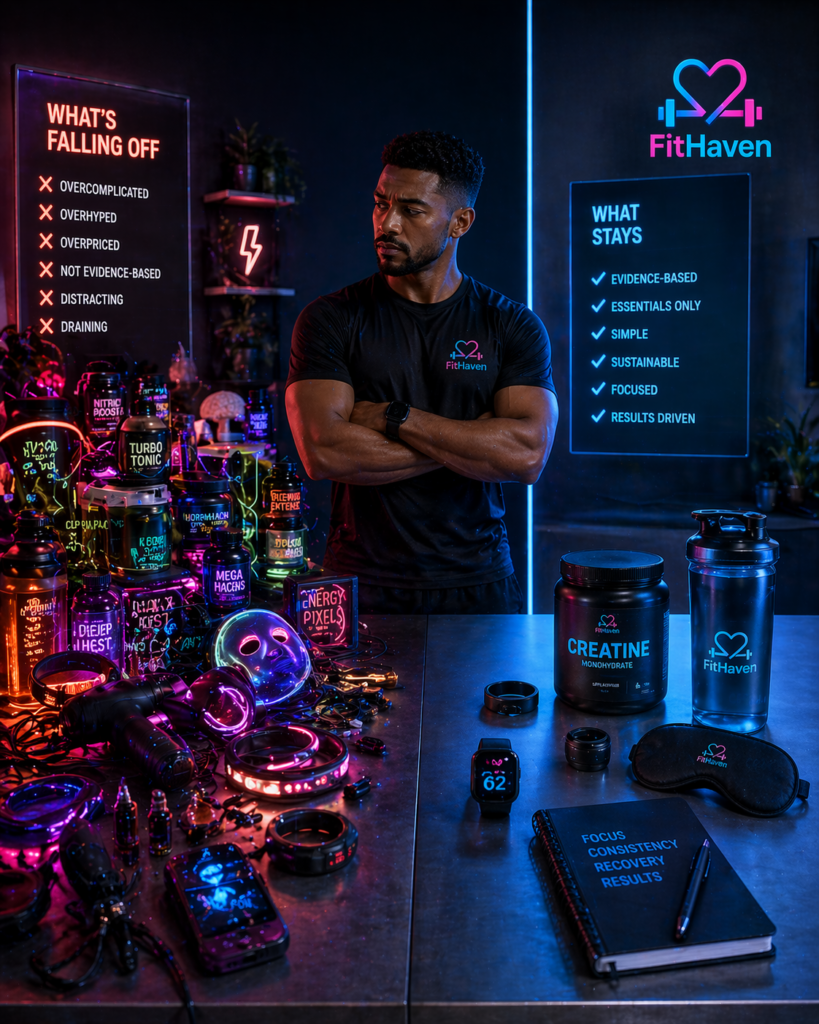
What distinguishes biohacking in 2026 is not its complexity, but its restraint. The most effective systems are not built on endless additions, but on deliberate selection. They prioritize clarity over novelty, sustainability over spectacle.
Creatine. Sleep. Structured training. Measured recovery.
These are not trends. They are constants.
The broader lesson is difficult to market, but impossible to ignore: optimization is not found in excess. It is found in precision.
Leave a Reply